➡️ INTRODUCTION
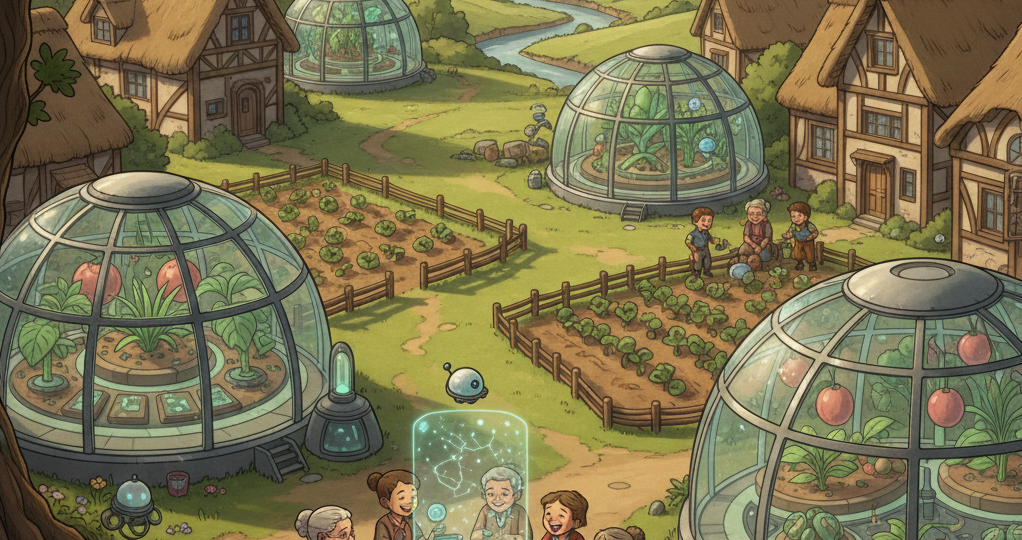
→ Where agriculture meets innovation, farming becomes smarter, more efficient, and better prepared for the future. Around the world, agriculture is evolving from traditional methods to systems supported by modern tools, improved practices, and informed decision-making. This shift matters because farmers face growing challenges such as climate change, rising input costs, and the need to produce more food with fewer resources. Innovation helps address these challenges by improving productivity, reducing waste, and protecting natural resources. For readers, understanding this intersection offers practical benefits: better farm planning, cost savings, improved yields, and the ability to adopt methods that support long-term sustainability and economic stability.
➡️ Key Points / Benefits
→ Improves efficiency and productivity in farming operations.
→ Reduces resource waste through smarter planning and tools.
→ Supports sustainable use of soil, water, and energy.
→ Helps farmers adapt to climate and market changes.
→ Encourages informed decision-making and long-term growth.
🔵 1️⃣ → Modern Tools Transforming Traditional Farming
Innovation in agriculture begins with the use of modern tools that simplify and improve daily farm activities. These tools help farmers work more accurately and efficiently while reducing manual effort.
Examples of modern agricultural tools include:
- Precision equipment for planting and harvesting.
- Digital tools for tracking farm inputs and outputs.
- Automated irrigation systems that respond to soil needs.
Step by step, farmers can begin by identifying tasks that consume the most time or resources. For example, switching from manual watering to scheduled irrigation can save water and labor. A practical tip is to start small and upgrade gradually. The main advantage is better control over farming operations, leading to consistent crop performance and lower operational costs.
🔵 2️⃣ → Innovation in Crop and Soil Management
Crop and soil management are at the core of productive agriculture. Innovation introduces methods that improve soil health while supporting strong crop growth.
Key innovative practices include:
- Soil testing to guide fertilizer application.
- Crop rotation to maintain nutrient balance.
- Use of organic inputs to enhance soil structure.
Farmers should regularly test soil to understand nutrient needs instead of applying fertilizers blindly. For example, rotating legumes with other crops can naturally improve nitrogen levels. A common mistake is ignoring soil health until yields decline. Innovative soil management improves water retention, reduces erosion, and supports healthier crops. Over time, these practices lead to stable yields and reduced dependency on chemical inputs.
🔵 3️⃣ → Smarter Water and Resource Management
Efficient use of water and resources is where agriculture truly meets innovation. With increasing water scarcity, smarter management is essential.
Actionable tips for resource management include:
- Using drip or micro-irrigation systems.
- Scheduling irrigation based on crop growth stages.
- Monitoring water usage to avoid over-irrigation.
Farmers should avoid watering crops based only on habit or fixed schedules. Instead, observing soil moisture and plant condition leads to better decisions. For example, applying water early in the morning reduces evaporation loss. The advantage of smarter resource management is lower costs, healthier crops, and reduced environmental impact, making farms more resilient to resource shortages.
🔵 4️⃣ → Innovation Supporting Climate-Resilient Farming
Climate variability has made farming more unpredictable. Innovation helps farmers prepare for and respond to these changes effectively.
Practical climate-resilient strategies include:
- Selecting crop varieties suited to local climate conditions.
- Adjusting planting times based on seasonal patterns.
- Using mulching to protect soil from heat and moisture loss.
Farmers should keep records of weather patterns and crop performance to identify trends. Avoid relying on past practices without considering changing conditions. Diversifying crops can also reduce risk during extreme weather events. The benefit of climate-resilient farming is reduced crop loss, more stable income, and improved ability to recover from environmental stress.
🔵 5️⃣ → Learning, Monitoring, and Continuous Improvement
Innovation in agriculture is an ongoing process that requires learning, monitoring, and adjustment. Successful farmers regularly review their practices and outcomes.
Step-by-step guidance for continuous improvement includes:
- Recording inputs, yields, and costs each season.
- Reviewing results to identify strengths and weaknesses.
- Making small, tested changes before large investments.
Do focus on practices that show clear benefits, and do not ignore lessons from failures. Monitoring progress helps refine techniques over time. Sharing experiences with other farmers can also accelerate learning. Continuous improvement ensures that innovation leads to real, lasting benefits rather than short-term experimentation.
➡️ CONCLUSION
→ Where agriculture meets innovation, farming becomes more efficient, sustainable, and resilient. By adopting modern tools, improving crop and soil management, using resources wisely, preparing for climate challenges, and focusing on continuous learning, farmers can build stronger agricultural systems. These approaches reduce costs, improve yields, and protect natural resources for future generations. Readers are encouraged to start with practical, manageable changes and monitor their results carefully. Innovation in agriculture is not about replacing tradition but enhancing it to meet the demands of a changing world.