➡️ INTRODUCTION
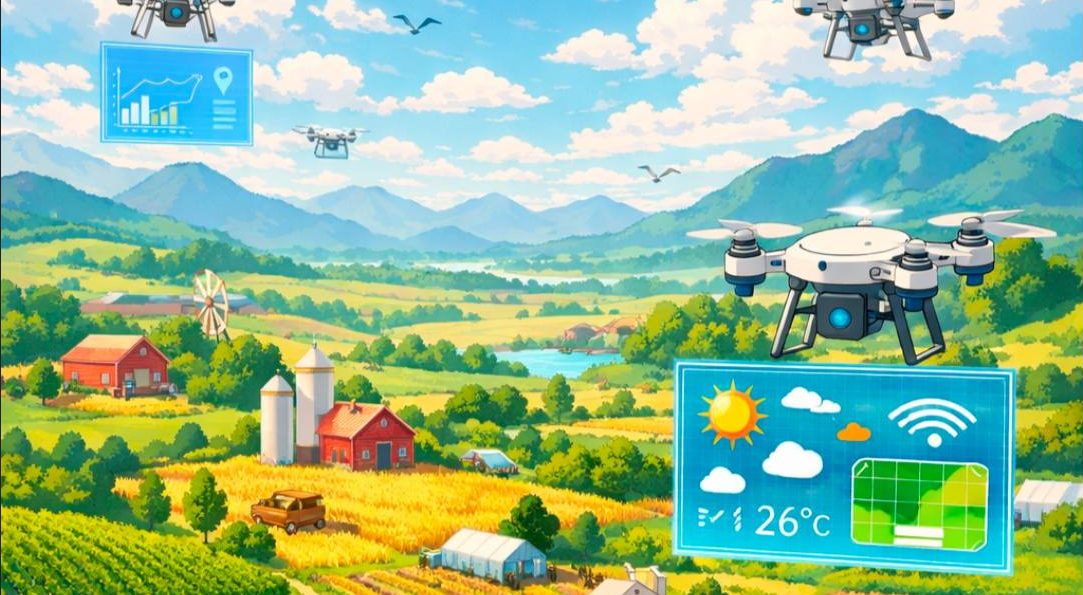
→ Exploring smart, sustainable farming worldwide means understanding how modern agriculture can produce enough food while protecting natural resources. As global population grows and climate patterns change, traditional farming methods alone are no longer sufficient. Smart and sustainable farming focuses on efficiency, careful resource use, and long-term productivity. This topic matters because it helps farmers reduce costs, improve yields, and protect soil, water, and ecosystems. Readers benefit by learning practical methods that can be applied on small or large farms, understanding global trends, and adopting proven practices that support stable income, food security, and environmental balance across different regions of the world.
➡️ Key Points / Benefits
→ Improves farm productivity with efficient resource use.
→ Reduces environmental damage and protects soil and water.
→ Helps farmers adapt to climate and weather changes.
→ Supports long-term food security and stable incomes.
→ Encourages innovation and informed decision-making.
→ Builds resilient farming systems for future generations.
🔵 1️⃣ → Understanding Smart Farming Concepts
Smart farming combines modern tools, data-based decisions, and practical knowledge to manage farms more efficiently. It does not mean complex systems only, but smarter planning and monitoring.
Key steps include:
- Observing field conditions regularly
- Recording crop performance and input use
- Making decisions based on real conditions
For example, adjusting irrigation based on soil moisture prevents water waste. A common mistake is adopting methods without understanding local needs. Smart farming starts with awareness and gradual improvement. When farmers understand their land better, they can reduce unnecessary inputs, improve yields, and manage risks more effectively over time.
🔵 2️⃣ → Sustainable Use of Soil and Water Resources
Healthy soil and efficient water use are the foundation of sustainable farming. Poor management leads to declining productivity and higher costs.
Practical tips include:
- Adding organic matter to improve soil structure
- Using crop rotation to maintain soil nutrients
- Applying water at the right time and amount
Avoid over-irrigation and excessive chemical use, which harm soil life. Step-by-step improvement begins with soil testing and careful observation. Sustainable soil and water management improves crop health, reduces erosion, and ensures farms remain productive for many years.
🔵 3️⃣ → Climate-Smart Farming Practices
Climate-smart farming helps farmers manage weather risks and changing climate conditions. These practices focus on adaptation and resilience.
Actionable steps include:
- Choosing crop varieties suited to local climate
- Diversifying crops to reduce risk
- Adjusting planting times based on weather patterns
Mistakes to avoid include relying on a single crop or ignoring early climate warnings. Climate-smart practices protect farmers from losses during droughts or floods. Over time, these methods stabilize yields, reduce uncertainty, and support consistent farm income even under changing conditions.
🔵 4️⃣ → Efficient Input Management and Waste Reduction
Using inputs efficiently is key to smart and sustainable farming. Inputs include seeds, fertilizers, water, and energy.
Practical guidance involves:
- Applying fertilizers based on crop needs
- Reducing losses during storage and transport
- Reusing organic waste as compost
Avoid applying inputs without proper planning. Step-by-step monitoring of usage helps identify waste. Efficient input management lowers production costs, improves profitability, and reduces environmental impact. Farmers who track inputs carefully can achieve better results with fewer resources.
🔵 5️⃣ → Monitoring, Learning, and Continuous Improvement
Sustainable farming is an ongoing process that requires regular monitoring and learning. Conditions change, so practices must adapt.
Step-by-step approach includes:
- Keeping simple farm records
- Reviewing results after each season
- Making small adjustments instead of major changes
Dos include regular observation and learning from experience. Don’ts include ignoring results or repeating ineffective methods. Continuous improvement helps farmers refine practices, improve efficiency, and respond to new challenges. Over time, this approach builds confidence, knowledge, and long-term success.
➡️ CONCLUSION
→ Exploring smart, sustainable farming worldwide highlights the importance of balancing productivity with environmental care. By understanding smart farming concepts, protecting soil and water, adapting to climate change, managing inputs efficiently, and continuously improving practices, farmers can build resilient systems. These approaches reduce costs, improve yields, and protect natural resources. Readers who apply these principles step by step can achieve stable production and long-term benefits. Adopting smart, sustainable farming practices supports food security, farm profitability, and environmental health for present and future generations.